|
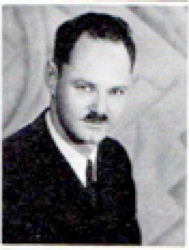
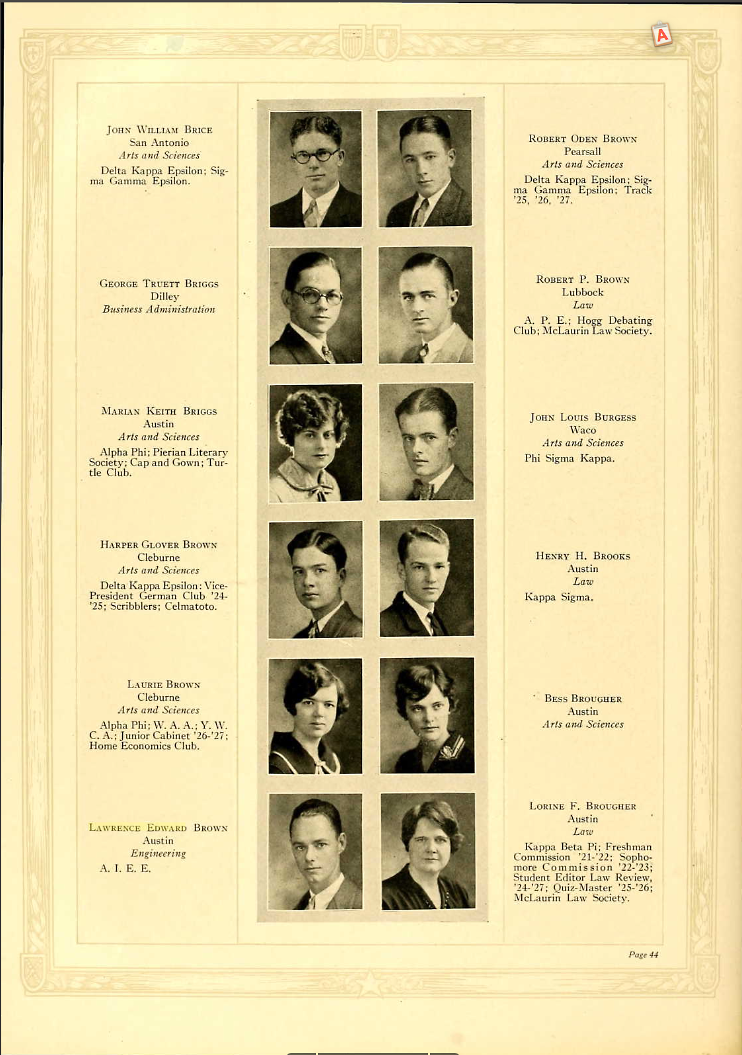
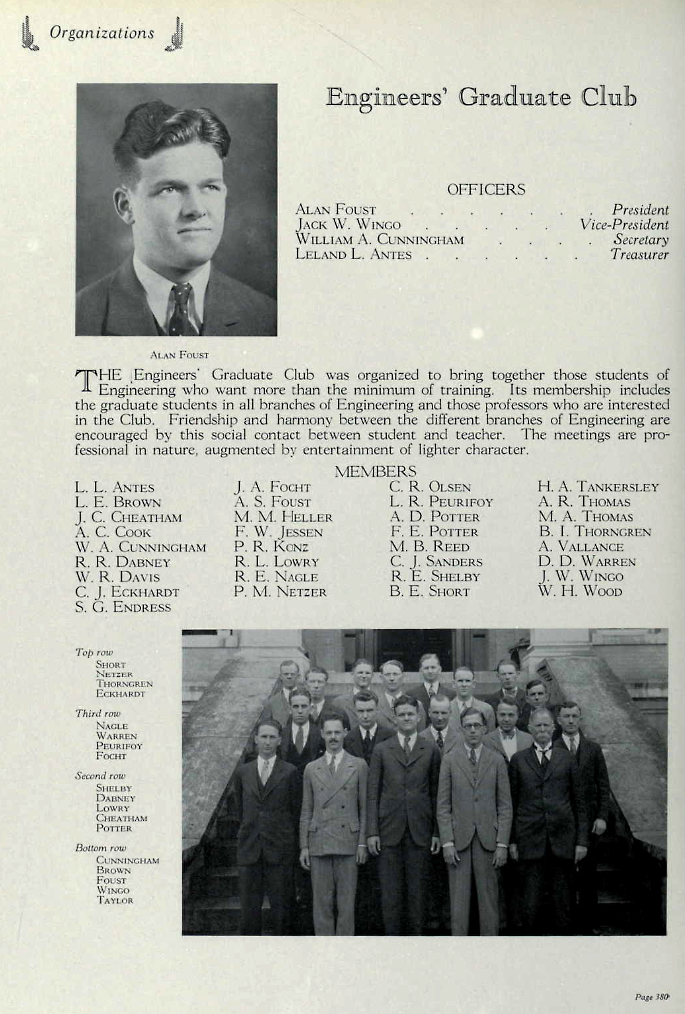
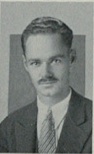 Lawrence Edward Brown (1906–1960) earned a PhD in 1935. He had received a BS in 1927 and an MS in 1929. His PhD thesis was titled, Solution of Electrical Networks by the Use of a General Network Equation.” He was born July 2, 1906, in Bastrop, Texas, to Coke Fowler (1874–1952) and Mary Elizabeth Alexander Spooner Brown. His father was a stockman. Lawrence had two siblings, James and Coke Jr. His mother’s sister’s son, Henry Neal Carkson also earned a PhD in physics from UT.
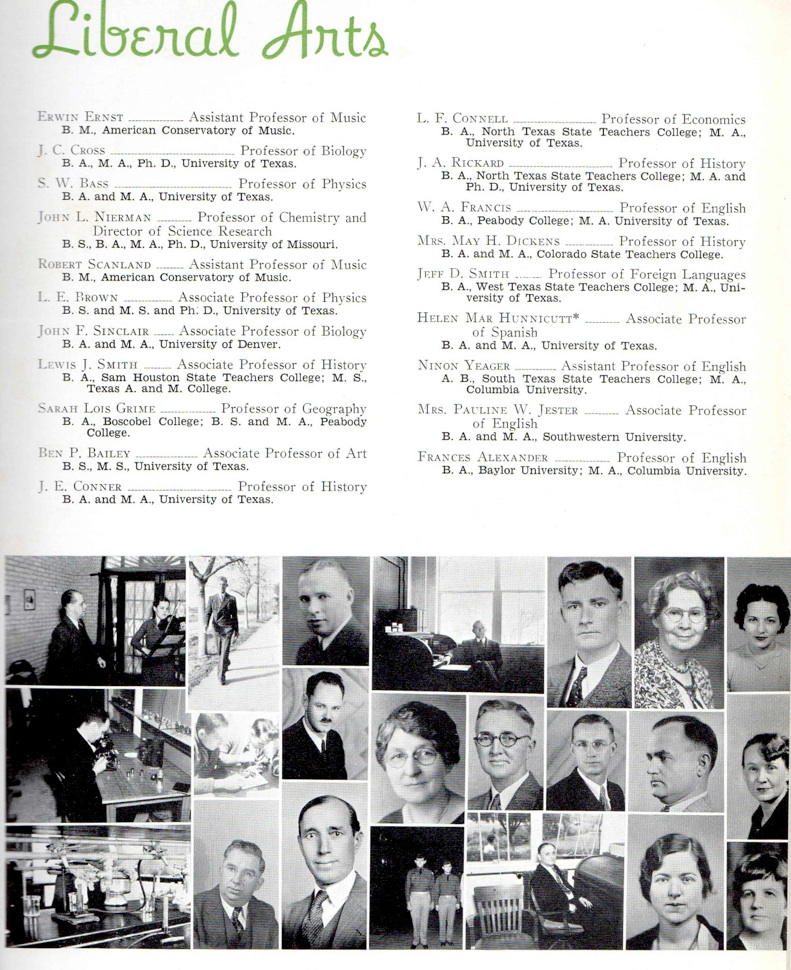
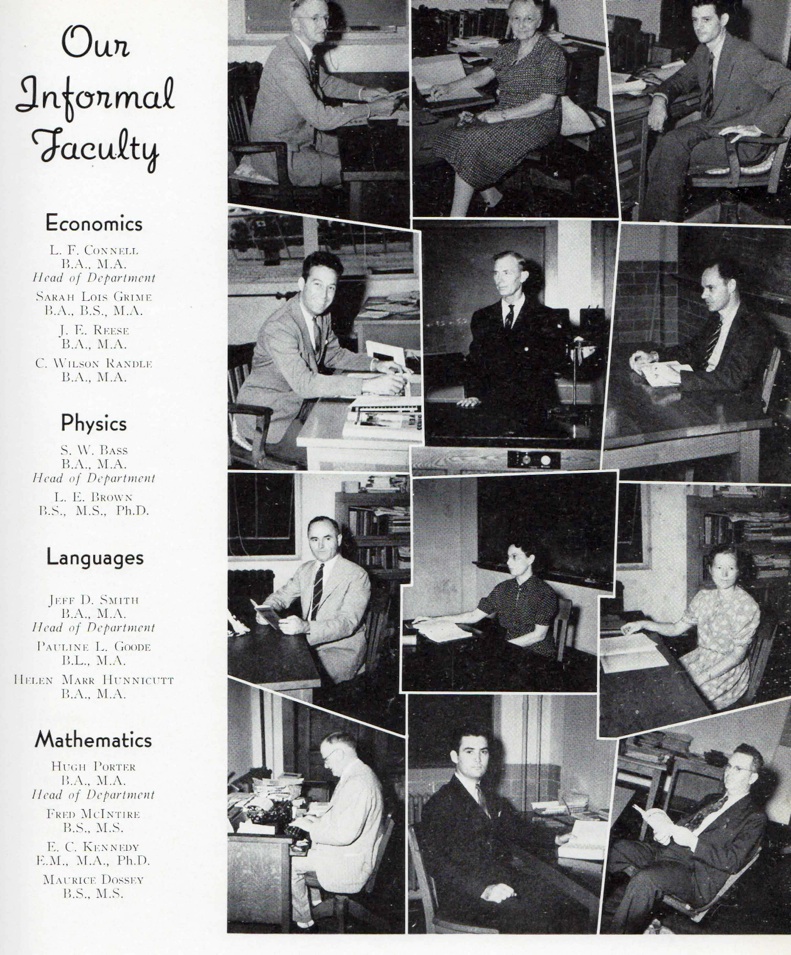
Lawrence worked as an engineer at Bell Telephone Labs from 1927–1928; served as Chair of the Department of Engineering at Schreiner Institute 1929–1930. He was a tutor in physics at UT between 1932–1935. In 1935, he was appointed Associate Professor of Physics and Math at Texas College of Arts and Industry in Kingsville. He was given leave from A & I to be the assistant director of the Military Physics Research Laboratory at the University of Texas, Austin, Texas. His address in 1935 was 802 W. Yoakum St, Kingsville, Texas. This picture is from 1929 when he was in graduate school. Lawrence died in Houston at Oak Place Hospital from complications associated with the tuberculosis he contracted as a young man. At the time he was living at 405 W. 35th Street in Austin. He never married.
Lawrence E. Brown Photo Album |
|
|---|---|
|
|

|
|

|
|
|
|
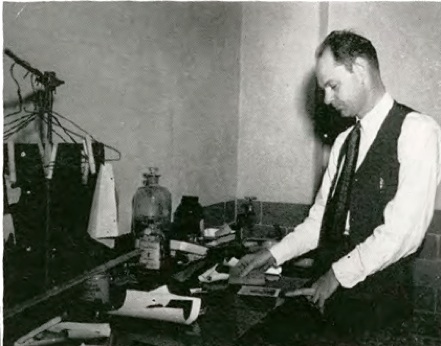
Lawrence E. Brown, physics professor |
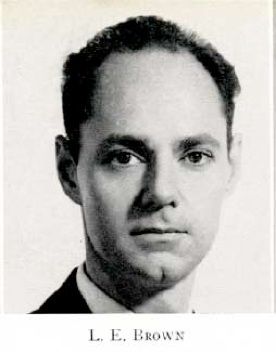
Lawrence E. Brown, physics professor |
|
|
|
|
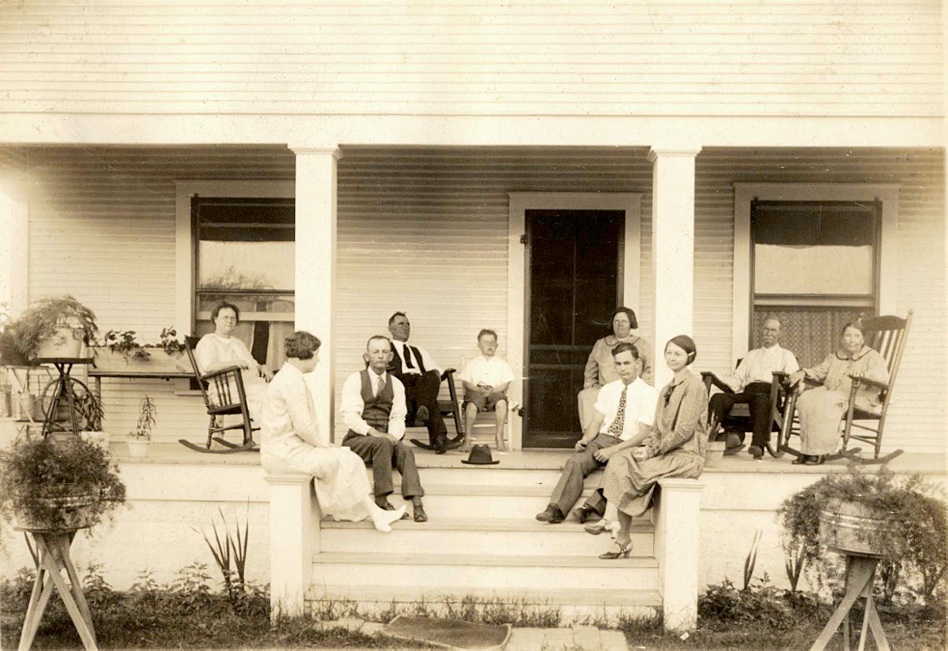
Left to Right: Mary Elizabeth Alexander Spooner Brown, mother of Lawrence Brown, Emeline Spooner Taylor, Herb Anderson, Robert Clarkson, Neal Clarkson, Effie Spooner Anderson by door, Lawrence E. Brown (in tie and white shirt), Stella Spooner, James Neal Spooner (Lawrence’s uncle). Mary Sharp Alexander Spooner, (Lawrence’s maternal grandmother). Clarkson porch in Bastrop |
|
Article by Lawrence E. Brown
Journal of Applied Physics / Volume 5 / Issue 3/ page 61 (1934)
On the Theory of an n‐Winding Transformer
Lawrence E. Brown
Department of Physics, University of Texas
(Received 6 July 1933)
Abstract:
The problem of a transformer of n-windings, each connected to a circuit containing a source of electromotive force, is treated. The assumptions are pure reactance windings, perfect couplings and linear loads. The equations for the current in any circuit, the open‐circuit voltage across any winding, the short‐circuit current in any winding, the impedance looking in at any winding, the voltage transformation ratios, the current transformation ratios and the impedance transformation ratios are given. The ideal n‐winding transformer, which is a more restricted case, is also treated.