
Left to right: Simpson Leroy Brown (1881–1966) and Arthur Holly Compton (1892–1962), U. Chicago (Compton was at Chicago 1923–1945, Nobel Prize–1927 for work done at Washington University) |
S. Leroy Brown, Professor of Physics Emeritus, died March 15, 1966, at the age of 85 years.
Simpson Leroy Brown was born November 23, 1881, in Brownsburg, Hendricks County, Indiana to John Wiman (1854–1894) and Mary Catherine Huffer (1854–1934) Brown. His siblings included Arthur Linsey, Mary Edna and William Amasy. His father died in 1894 and his mother was a landlord in 1900.
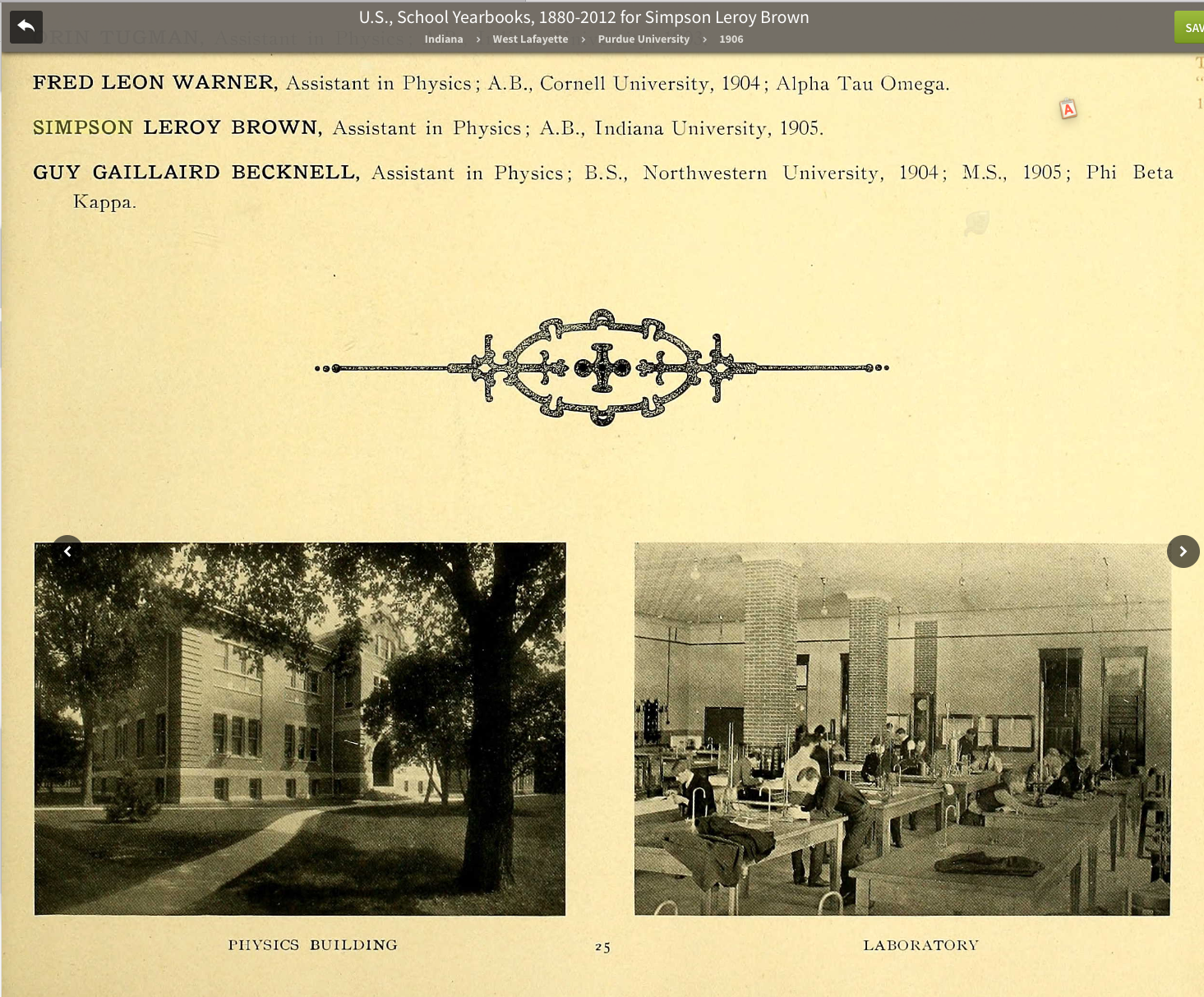
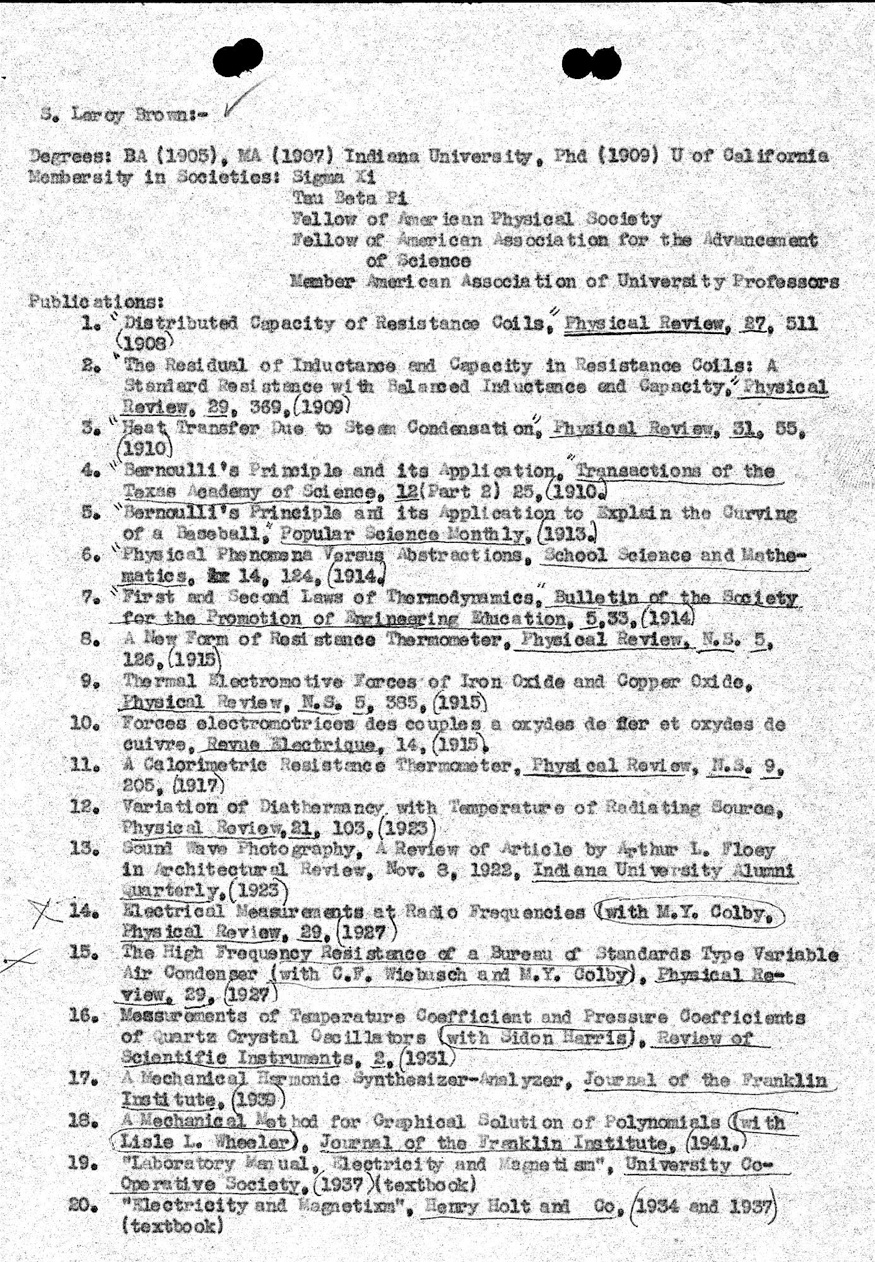
Following graduation from Bloomfield, Indiana High School he received degrees from the University of Indiana—the BA degree in 1905 and the MA degree in 1907. His doctorate was from the University of California in 1909, with major in physics and minor in electrical engineering and mathematics. During the graduate study he was a Whiting Fellow and was an elected member of Tau Beta Pi and Sigma Xi. (Harold Whiting (1855-1895) was youngest member of Harvard Physics Department in1884, was said to have an agility of mind and inventiveness approaching genius. He and his whole family perished in a shipwrecck in 1895. In accord with his Will the Whiting Fellowships were established thave been supporting graduate students ever since. Other UT students receiving this fellowship were Conrad Shuddemagan, S. Leroy Brown, Charles P. Boner.)
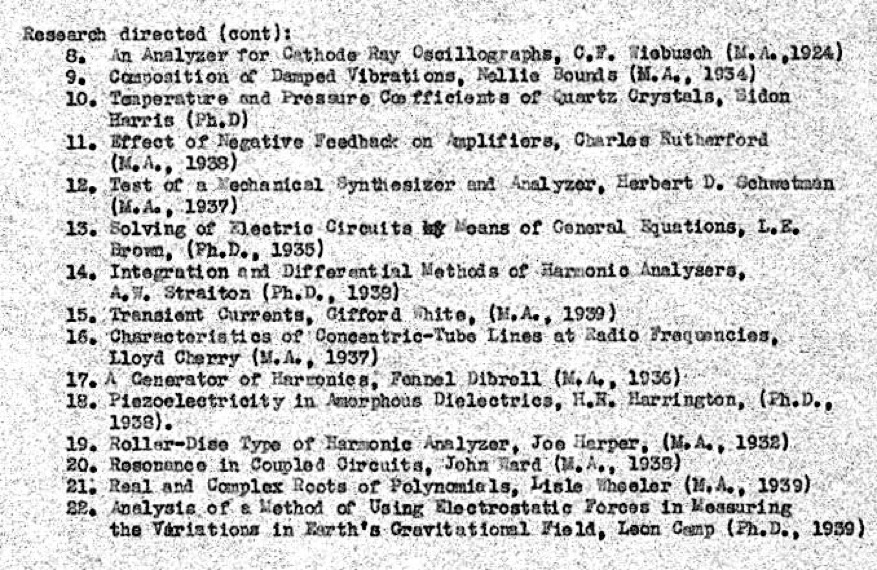
Dr. Brown held student appointments as Assistant Instructor at Purdue University and Instructor at Lehigh University. He came to the University of Texas as Instructor of Physics in 1912 and retired as Professor of Physics in 1954. During World War I, he was President of the Academic Board, Air Service School in Austin, where he succeeded well in setting up emergency training and teaching facilities for radio operators. Later, he was consultant to the War Research Laboratory of the Department of Physics during World War II, and later to its successor, the Military Physics Research Laboratory. He served many years as Chairman of the Department of Physics. Among various organizations he was a Fellow of the American Physical Society and of the American Association for the Advancement of Science. His biography was carried in Who's Who in America and Who's Who In American Education.
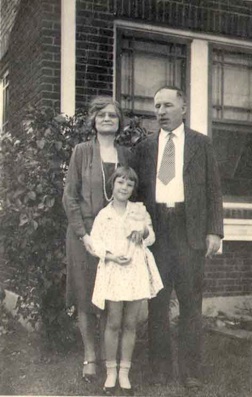 On July 7, 1910 in Globe, Gila County, Arizona, Dr. Brown married Miss Josephine Ellen Brown (known to her many friends as Dearie). She operated a tearoom on North Guadalupe Street for a number of years before her death on September 18, 1959. Dr. Brown is survived by one daughter, Mrs. Elizabeth Bee Brown Campbell Meyer (1923–1975), of Victoria, Texas, and two grandchildren (Judith Ellen Campbell, Austin and James A. Campbell, Victoria). (At right are the Browns at L.W. Blau’s home in Houston.)
In many respects Dr. Brown was one of the early great teachers at the University. His freshman and sophomore classes were large and enthusiastic, and they were taught by a dedicated man in a loud and convincing voice. His points of view in class were driven home as if by a hammer, as were also his points of view in discussions outside the classroom. While advanced and graduate classes in physics were small during most of his teaching years, his classes were usually larger than the departmental average.
To those of us who were members of his class and who were encouraged to become teachers, Dr. Brown was an inspiration and a force as well. He put such people through a strict, but friendly, regime of stand-by and unexpected emergency teaching from day to day—usually with little or no warning. When funds were tight, as they always were during the depression years, he somehow saw to it that the young teacher had a long-session appointment and a little work in the summer. If things got worse he made loans to them to bridge their fiscal gaps.
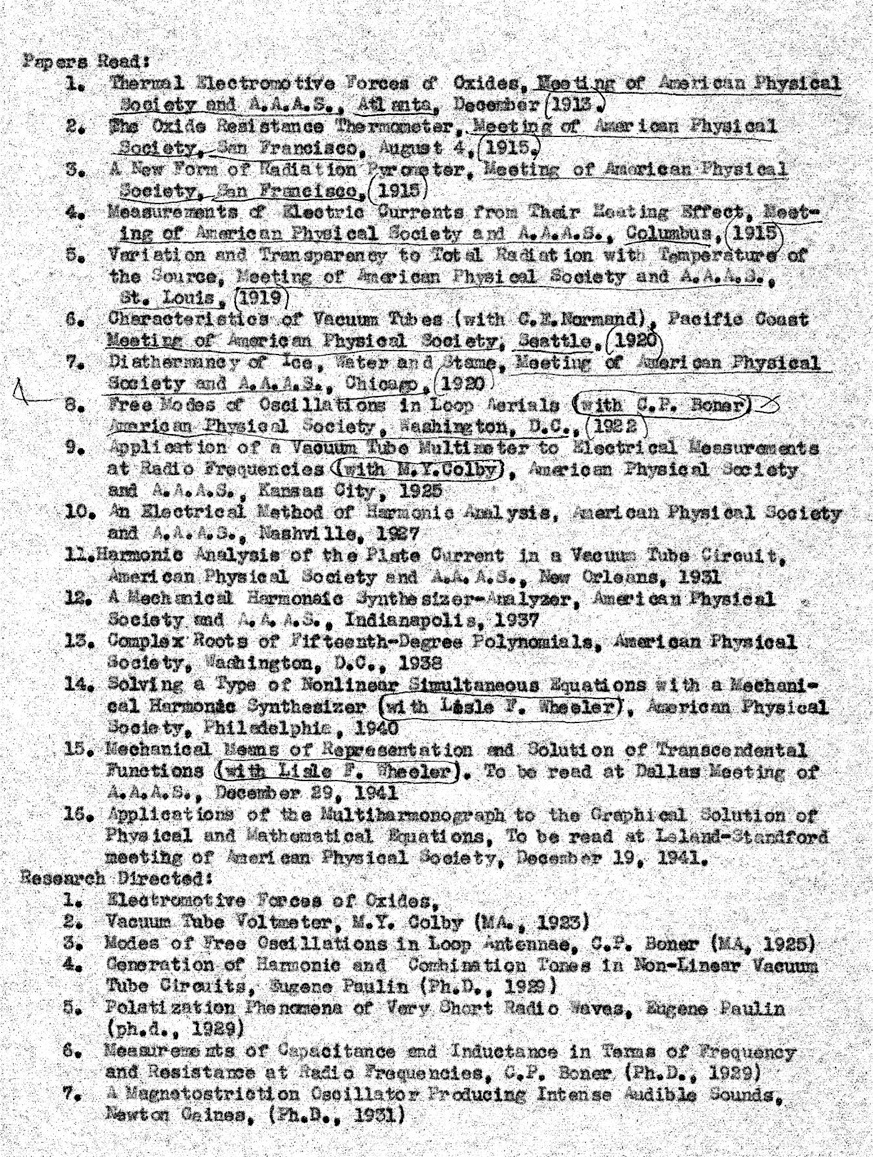
In the 1920s and early 1930s money for research was almost non-existent. Moreover, there was little encouragement for a member of the faculty to do research or to publish or to attend national meetings. Nevertheless—and to indifference and some ridicule—S. Leroy Brown managed to get together enough crude items of equipment to use day and night in his laboratory, with the few advanced students who were around the wooden shacks housing the physics department. From such efforts came some 30 articles in national journals and three textbooks. He regularly attended meetings of the American Physical Society, mostly at his own expense.
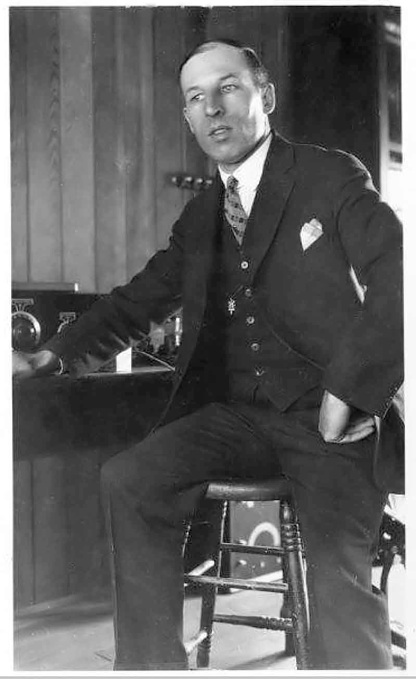
Dr. Brown was working in the field of high-frequency circuits when radio was in its infancy and, later, when the vacuum tube was invented. He and his students built the first broadcasting station in Austin -- known first as WCM and later as KUT. One of his students, Robert Shelby, was the station operator and later became chief television engineer of NBC. Others did the announcing, built equipment, played the piano and organ.
Although the broadcasting venture was short-lived and was soon turned over to the Extension Division, it somehow served to persuade more students to take up advanced physics and to go on to more academic matters. Dr. Brown's days in research were mostly those of no funds (except those slightly diverted from M&E), temporary space under leaky roof and whistling floors, and no equipment except string and sealing wax.
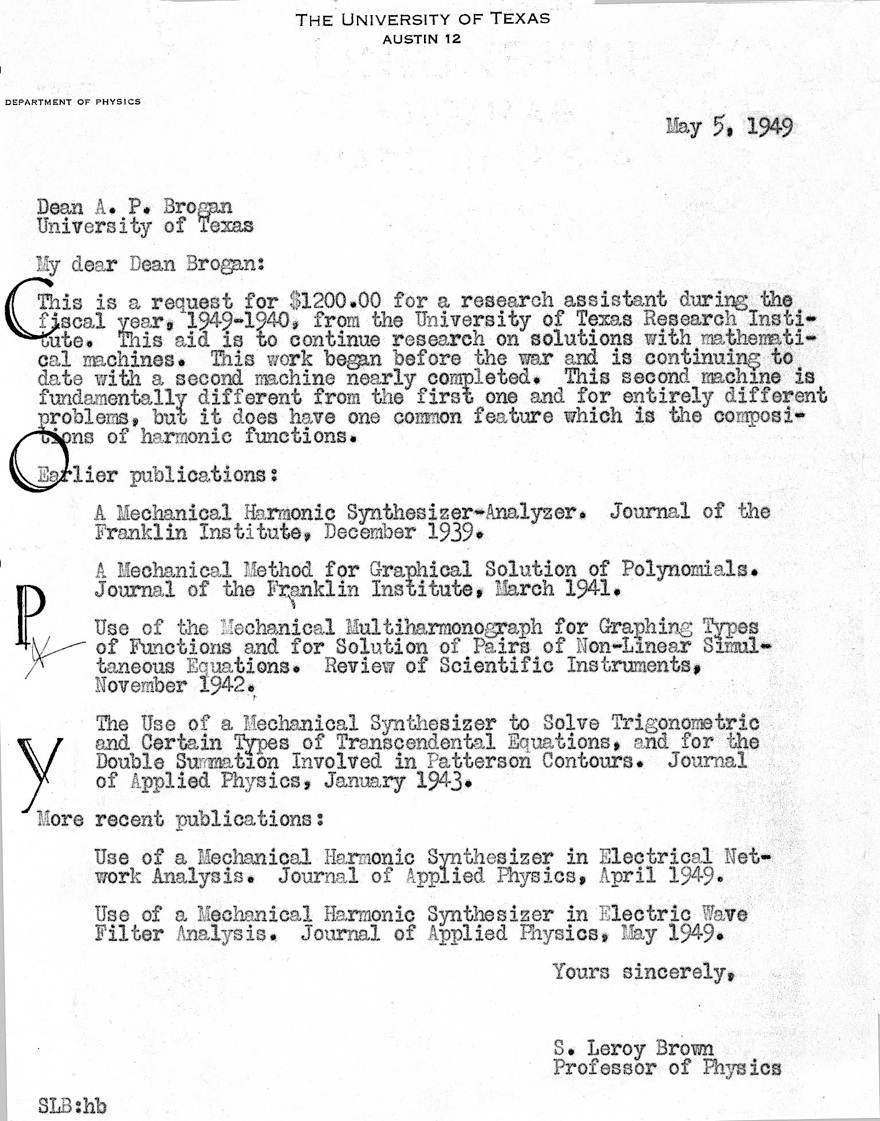
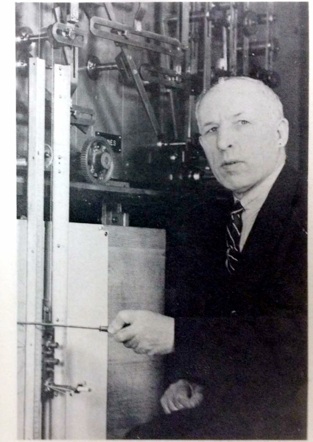 S. Leroy Brown's research was in a number of areas—some of them restricted to problems for which he could find a piece of equipment. If there was no equipment, his paper was only a paper study of the problem. The topics covered included heat transfer, Bernoulli's Principle and the curving of a baseball, new types of resistance thermometers, thermal electromotive forces, radio-frequency electrical measurements, residuals of inductance and capacitance in resistance coils, and other subjects. He conceived and built a complex mechanical harmonic synthesizer analyzer, which was, in many respects, a forerunner of electrical analog computer. Late in 1939, he did extensive work on his multi-harmonograph for solving pairs of non-linear simultaneous equations and transcendental equations, and in doing certain types of network analysis. Brown is shown at right with this device.
Dr. Brown was in physics during what may now be termed its classical period. Particle physics was slowly developing, nuclear fission was not at hand, and there were neither massive particle accelerators nor magnificent amounts of federal funds. For the most part, in the days of his prime, there was nothing to do but teach and to make-do in research with what he could put together. Both of these things he did—and did well.
Prepared by:
C. P. Boner, Chairman, H. L. Lochte, W. S. Stone
With additions, photos, and corrections by Mel Oakes.
During WWII the Physics Department had a great dane dog, Judge, which hung around the Physics Department and was something of a mascot. The department had a barbecue-picnic each year. Beef was in very short supply. Dr. Brown showed up at the picnic and shortly thereafter the dog comes trotting in. Brown remarked, “Judge, I am really glad to see you here today.”
S. Leroy Brown Photo Album |
|
|---|---|

Brown is number 8. |
|

|
|

|
|
|
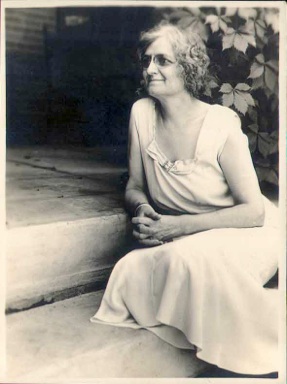
|

|
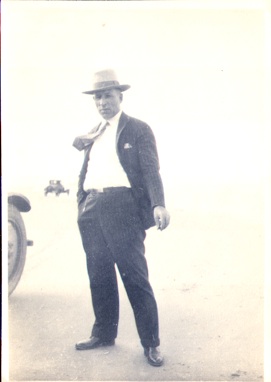
|

|
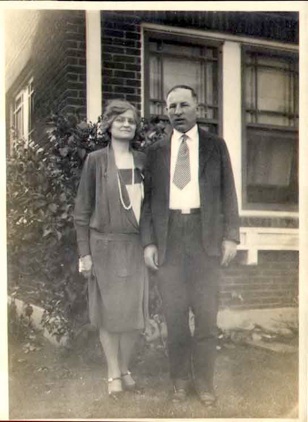
front of LW Blau house in Houston |
|
Josephine “Dearie” and Simpson Leroy Brown and daughter, Elizabeth (later Campbell then Meyer), L. W. Blau house in Houston, ca.1932 Elizabeth Bee Meyer was the adopted daughter of Dr. Simpson Leroy Brown and his wife Josephine Allen Brown. Elizabeth Bee Brown was married twice. her first husband was James A. Campbell, Her second husband was Fred G. Meyer. She was the mother of two Campbell children. She was born March 23, 1923 and died in Victoria, TX, December 2, 1975. |

in front of L.W. and Mollie Blau’s house in Houston |

|

front of L.W. and Mollie Blau’s house in Houston |

second from right, back row. |
|
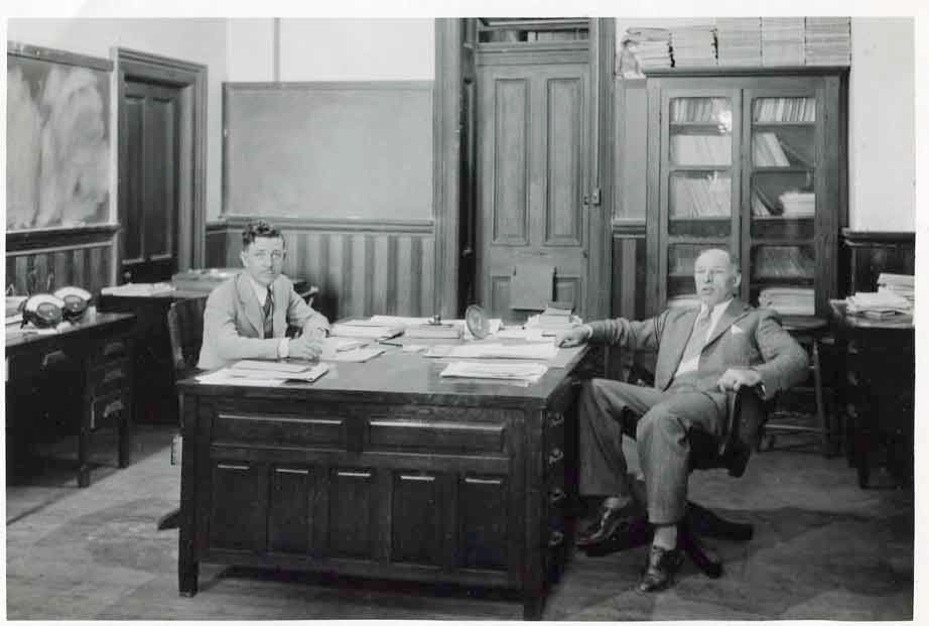
Main Building, 1930s |
|

|
|

|
|
|
|

Invented and built by S. Leroy Brown.
15 feet long, 7 feet high, 2 feet wide and weighed one ton. |
|
|
|
|
|
|
|
|
|
|
|
|

S. Leroy and Josephine Brown House HISTORIC LANDMARK COMMISSION ARCHITECTURE RESEARCH OCCUPANCY HISTORY |
|