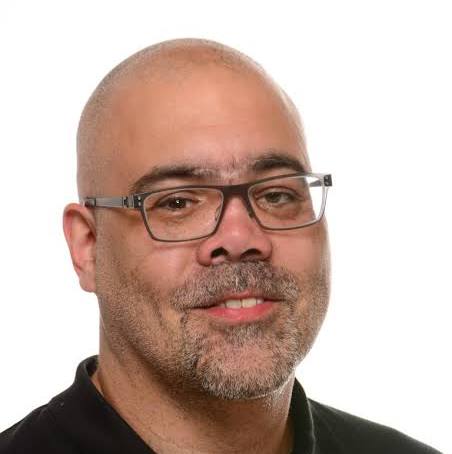
Jochen Reinhold Guck |
Jochen Reinhold Guck was born in Schweinfurt, Germany on January 19, 1973, the son of Elfriede Maria Guck and Ewald Alfred Guck. After attending the Grundschule Bad Königshofen, Germany, between 1979–1983 and the Gymnasium Bad Königshofen, Germany, between 1983–1993, he received the Abitur in 1993. After that he was a student of physics at The Bayerische Julius- Maximilians-Universität Würzburg, Germany, where he received the Vordiplom in September 1995. Participating in a student exchange program between The Bayerische Julius-Maximilians-Universität Würzburg, Germany, and The University of Texas at Austin, he entered The Graduate School at The University of Texas in September 1996 and received an M.A. in physics in December of 1997. His supervising professor was Josef Käs. His thesis was entitled, "The Optical Stretcher : A Novel, Noninvasive Tool to Manipulate Biological Materials".Jochen was awarded a PhD in 2001. Again his advisor was Professor Käs. His dissertation was entitled, " Optical Deformability: Micromechanics from Cell Research to Biomedicine" During that graduate work, he was supported by a scholarship of the Deutscher Akademischer Auslandsdienst for his study in the USA. As part of his graduate education he participated in curricular practical training as consultant for Evacyte Corporation, an Austin-based biotechnology company. As a graduate student, he was co-inventor of “The Optical Stretcher”, protected by U.S. and international patents. Publications during that time included several peer-reviewed journal articles and a book chapter. In 2020, Jochen was invited to give a lecture at the Schawlow-Townes Symposium. Here is link to a YouTube video of that talk about his work with the optical Stretcher. Schawlow-Townes Symposium.
One further insight in to Joachen's time at Texas is from and article in the March 01, 2023, Physics Today by Toni Feder on accessibilty for physicist. "A car accident left him paraplegic when he was 17. The main barriers he’s had to face in his professional life, he says, have been maneuvering around labs and protecting his eyes: In his wheelchair, his eyes are level with lasers on optical tables. When he arrived for graduate studies at the University of Texas at Austin in 1996, the physics building didn’t have a wheelchair-accessible bathroom; workers crafted a makeshift solution for him."
Comment on Jochen from Jack Clifford, machinist at University of Texas:
"Jochen Guck was in the Käs lab in the Swinney group, he graduated in 2001…he was a very dear friend and I’m heartbroken…so many great memories and moments together..we both loved photography and I built a darkroom in his house (across the street from me on Caswell) and we had fun processing film and printing, we enjoyed going out and having a few beers and shooting pool and he spent a lot of time in the student shop (he was very efficient) which was always enjoyable and fun. I’ll never forget his kindness and sense of humor……Jack Clifford"
Jochen's activities subsequent to University of Texas are included in the articles quoted below.
From Friedrich-Alexander UniversityFaculty of Sciences Website. https://www.physics.nat.fau.eu/2025/10/08/obituary-fau-professor-and-director-of-the-mpl-jochen-guck-has-passed-away/
Obituary: FAU professor and director of the MPL Jochen Guck has passed away.
It is with great sadness that we announce the unexpected passing of Prof. Dr. Jochen Guck, Chair of Biological Optomechanics at Friedrich-Alexander University Erlangen-Nuremberg (FAU) and Director at the Max Planck Institute for the Science of Light (MPL), on October 3 after a serious illness. He headed the Department of Cell Physics at the MPL and the Max Planck Center for Physics and Medicine (MPZPM), whose development he played a key role in shaping. As a globally recognized pioneer in the field of cell mechanics, his visionary research contributed significantly to the success and international reputation of the collaborative research center and FAU.
The Department of physics and his colleagues at the MPL and MPZPM are deeply saddened by the death of Jochen Guck. With his passing, the scientific community and those who worked with him have lost not only a brilliant colleague, outstanding teacher, and good friend. Jochen Guck’s ideas shaped and inspired a new generation of scientists. His colleagues will miss him deeply and at the same time carry on his vision: to better understand the human body and combat disease by combining the forces of physics and medicine.
Our sympathy goes out to his family and all those who were close to him.
Using physics to detect diseases
With his interdisciplinary team, Jochen Guck pursued the mission of driving a paradigm shift in biology by shifting the focus from molecular biochemistry to the observation of emergent physical phenomena at the cellular level. Using novel physical methods, he researched the specific physical properties of cells and tissues that enable them to perform their biological functions.
For example, the real-time deformability cytometry (RT-DC) he developed enables thousands of cells in a drop of blood to be recorded and evaluated within just a few seconds. His novel approach to using Brillouin microscopy deepened the fundamental understanding of cell mechanical processes in unexplored clinical pictures. An important aim of his work was to make mechanobiology usable as a diagnostic and therapeutic tool in medicine. To this end, in addition to his academic research, he successfully founded companies as a link between innovative basic research and certified applications. One example is the start-up company Rivercyte, which aims to transfer deformability cytometry technology to the clinical environment.
Life and scientific success
Jochen Guck was born in Schweinfurt, Germany in 1973. He studied physics in Würzburg and received his doctorate from the University of Texas at Austin, USA. After working as a group leader at the University of Leipzig, he moved to the Cavendish Laboratory at the University of Cambridge in the United Kingdom as a lecturer in 2007 and was appointed reader in 2009. In 2012, Guck was appointed Alexander von Humboldt Professor of Cellular Machines at the Biotechnology Center of the Technical University of Dresden, where he served as executive director. Since October 2018, he has been a director at MPL and headed a division at MPZPM in Erlangen. Since August 2020, he has held a professorship in Biological Optomechanics in the Department of Physics at Friedrich-Alexander-Universität Erlangen-Nürnberg (FAU) and, since 2024, in the Faculty of Medicine of FAU.
Jochen Guck has been honored with some of the most prestigious scientific awards in recognition of his outstanding contributions at the interface of physics, biology, and medicine. In 2024, he received the Greve Prize from the Leopoldina, one of Germany’s highest honors for excellent basic research. The award was given for his groundbreaking research on the role of mechanical forces in cells and tissues. Previously, he received the Wilhelm Ostwald Medal from the Saxon Academy of Sciences in recognition of his fundamental work on the physics of living matter and the establishment of mechanobiology as an independent field of research. In 2008, the U.S. National Academy of Sciences honored him with the Cozzarelli Award for his pioneering work on the examination of the optical properties of the retina.
Funeral speech by the President of the Max Planck Society Professor Dr. Patrick Cramer
For prof. Dr. Jochen Guck 19.01.1973 – 03.10.2025
Main chapel of the Leipziger Südfriedhof on 14.11.2025
Dear Relatives,
Today is a painful day for you and all of us – also for my colleagues from the Max Planck Institute for the Physics of Light, from the Max Planck Center for Physics and Medicine and from the entire Max Planck Society, which I am allowed to represent here today as president.
We all know about the preciousness of life, about its vulnerability and about its finitude. And yet death often hits us completely unprepared, always relentlessly - and all the harder when a dear person still had so much life ahead of him.
Jochen Guck was bursting with ideas, had plans for the next projects. He had to leave us far too early. But he went this way with great dignity and until the end with joie de vivre and hope. That can give us comfort in this difficult hour.
In the much too short time he had, Jochen achieved Großes as a scientist - with his creativity, with his sharp mind, with his thoughtful, balanced view of things. And with his warmth, his attentiveness, also as a leader.
I remember very well how I met Jochen Guck and how he enthusiastically showed me a fascinating film: blood cells that squeeze through a very thin capillary. He had developed an elegant method with which he could not only measure the deformability of cells, but also make it usable for medical diagnoses. A real pioneering achievement that his team accomplished – for science, for medicine and ultimately for all of us.
When we were able to win Jochen Guck in 2018, it was a great stroke of luck. He not only became director, but was also exactly the right leader to fill the new research center with life together with the University of Erlangen-Nuremberg. With his university colleagues - and above all with you, dear Vahid - Jochen has created a legacy that points to the future and will enrich our community for a long time to come.
Jochen was brave and he encouraged others to look for the new. For this he used the means of physics. You could say: physics was his magic box. Jochen also recognized their potential where others were blind to it. Quite simply: he was open. In Jochen's department there are lasers, but also zebrafish aquariums. He published not only in physics, but also in biology and even in materials science, engineering and medicine.
Dear family,
Jochen, the man, is certainly the explanation for why Jochen, the scientist, was so successful: he was fearless, sober and stubborn. But no life is only the product of the one person who was allowed to live it. No life achievement arises only from an individual. We all have an environment. We are shaped and accompanied. We are encouraged, challenged and inspired by others – by family, friends, sponsors, colleagues and employees.
Dear friends,
To know that today many of Jochen Guck's companions are here, from Leipzig, from Dresden and from Erlangen; to know that colleagues from all over the world and even friends from their school days have entered themselves in the virtual book of condolence of our institute and thus said goodbye to Jochen - to know that fills me with deep gratitude today.
All these people have left a mark on Jochen's life. So he could mature to the person and scientist we all admired. But this also applies the other way around: Jochen has left traces in the lives of these many people. He has changed many of us. This can also give us comfort today.
Dear Funeral Assembly,
A few years ago, a biography of Max Planck was published, which clarified his difficult personal destiny. I just want to remind you that our namesake lost four of his five children during his lifetime. The book is entitled: When the Light Lost Its Lightness.
That's what I had to think about today. Because Jochen has conjured with light. And the lightness we saw in it today gives way to a heavy pain. But it is precisely in this hour that it becomes clear how rich the life he could lead was. And that there is much that we can take from his way of living into our own lives. That is exactly what I wish for us in this difficult hour.
We will preserve Jochen Guck an honorable memory.
A most inspiring collection of condolences is found here: Condolences
Among the condolences is a poem by a former student:
Tribute to Prof Jochen Guck (1973 - 2025)
Dear Jochen,
You embodied science without borders;
people from every part of the globe were members of the Guck Lab.
You embodied physics without borders;
scientists from other disciplines collaborated with the Guck Lab.
You embodied optics without borders;
over 145 papers connecting imaging and medicine from the Guck Lab.
You embodied mechanics without borders;
six patents involving cell mechanics and diagnostics from the Guck Lab.
You embodied academics without borders;
celebrating birthdays and socializing, were part of life in the Guck Lab.
You embodied excellence without borders;
as in the Leipzig, Cambridge, Dresden, Erlangen versions of the Guck Lab
You embodied charity without borders;
in a free hospital, JUHRI, in Africa, there is a Prof. Jochen Guck Diagnostic Lab.
You embodied humanity without borders;
for you were first of all a good human being, rest in peace, from the Guck Lab.
Dr Andrew E. Ekpenyong, Associate Professor of Physics,
Creighton University, Nebraska, USA.
(Jochen Guck’s former PhD and Post-doctoral student)
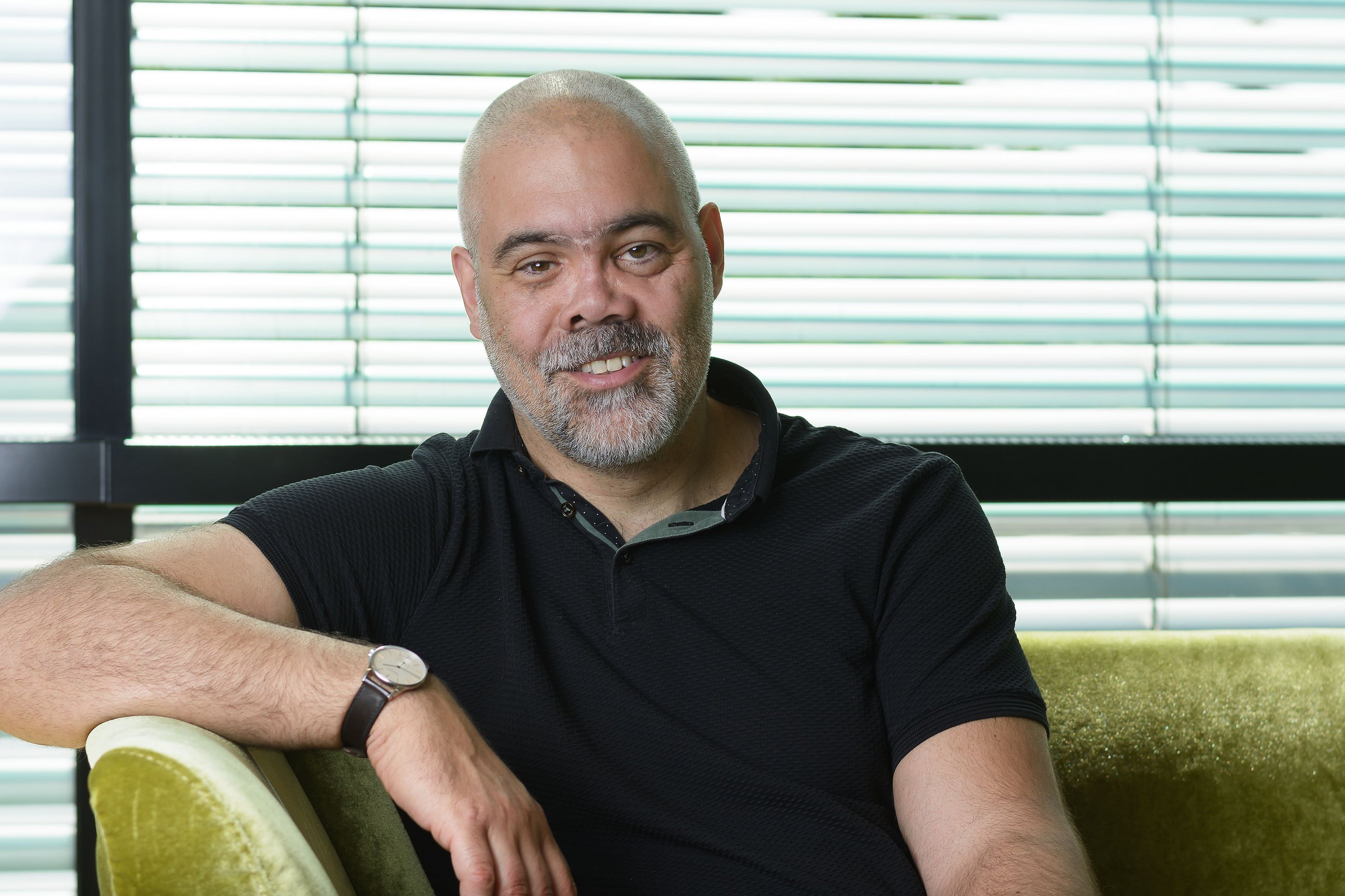
Jochen Guck Photo Album |
|
|---|---|
|